Special Educational Needs and Inclusion

Inclusion and SEND provision at Richard Taylor CE Primary School:

‘A Community of Belonging’

We believe every child belongs, and we work hard to ensure every learner can flourish.

Our Vision for Inclusion

Our school is built on a strong foundation of inclusion, with high expectations for every learner, whatever their starting point.  We are committed to ensuring that every child feels valued, safe, and welcomed, regardless of faith, ability, gender, ethnicity, background, or circumstance. We aim to know children well, early and often.

Our school works to remove barriers to learning so that all pupils can thrive.

Through high‑quality, evidence‑informed teaching and a broad, balanced curriculum, we aim to support every child to achieve their full potential. High quality adaptive teaching underpins our approach, ensuring that all pupils receive the right support and scaffolding to succeed, including those with special educational needs and/or disabilities.

‘Our school is a place where all know that they are safe, loved, and able to flourish as children of God.’

Working Together for the Best Outcomes:

Positive relationships with parents and carers are vital for the success and wellbeing of all children. For children with SEND and those who are vulnerable, these relationships are particularly important and may require additional time, care, and communication to build. We understand that families may need more opportunities to share information, ask questions, and develop trust, and we are committed to giving the time needed to ensure families feel listened to, supported, and fully involved in their child’s journey.

We work closely with a range of outside professionals and support services to make sure children and families get the help they need. This might include speech and language therapists, educational psychologists, health professionals, social care teams, or specialist SEND services. By working together and sharing information (with parents’ consent), we can make sure that the right support is given at the right time.

Our SEND Governor is Dr Jan Johnson

To find out more, please read our SEND Policy and Information Report.


The Local Offer

The local offer provides information on what services children, young people and their families can expect from a range of local agencies, including health and social care. Knowing what information and services are available gives you more choice and therefore more control over what support is right for you and your child. Information about the North Yorkshire Local Offer can be found below.

The Local Offer link takes you to the North Yorkshire Local Offer webpage, which is regularly updated.
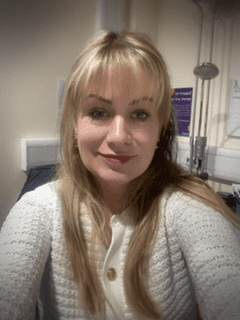

Our SENDCo is Emily Styles (NASENCo Qualification)

Contact her on e.styles@richardtaylor.ycst.co.uk

Mrs Styles hosts a parent coffee morning once every half term

We address a range of themes for ALL parents including:

  • Sleep
  • Meltdowns
  • Big feelings
  • Managing mornings
  • Mental health and wellbeing

“It’s a great opportunity to chat with parents around similar topics.

I feel less isolated with the problems with my daughter and

I feel I can ask for help from staff”

We are proud to work closely with Compass Phoenix to support the emotional mental health and wellbeing of our children.

Parents can also self-refer here  Compass Phoenix (North Yorkshire) – Compass

SENDIASS – SPECIAL EDUCATION NEEDS AND DISABILITIES INFORMATION, ADVICE AND SUPPORT SERVICE
SENDIASS North Yorkshire is a service for parents and carers of young people aged 0-25 with special educational needs and /or disabilities (SEND) as well as young people themselves. It is impartial, which means it is not bias and gives confidential information, advice and support that is arms length to the Local Authority.

The Accessibility Plan has three core aims:

  1. To increase access to the curriculum for pupils with a disability, expanding and making reasonable adjustments to the curriculum as necessary to ensure that pupils with a disability are as, equally, prepared for life as are the able-bodied pupils; (If a school fails to do this they are in breach of the DDA). This covers teaching and learning and the wider curriculum of the school such as participation in after-school clubs, leisure and cultural activities or school visits. It also covers the provision of specialist aids and equipment, which may assist these pupils in accessing the curriculum.
  2. To improve access to the physical environment of the school, adding specialist facilities as necessary. This covers reasonable adjustments to the physical environment of the school and physical aids to access education.
  3. To improve and make reasonable adjustments to the delivery of written information to pupils, staff, parents and visitors with disabilities. Examples might include hand-outs, timetables, textbooks and information about the school and school events. The information should be made available in various preferred formats within a reasonable time frame.

P62b Accessibility Plan Sept 2023

Click on the link below to see a list of books which have been chosen especially for their value in dealing with mental health issues, feelings and emotions, the books on this list can be used with pupils to start conversations that enable children to begin to make sense of their own feelings and understand ways to manage and deal with their emotions.

Best children’s books – Emotional Literacy & ELSA Booklist (booksfortopics.com)

Transitioning from home to school can be tricky for some children.
We are here to help with some ‘top tips’ which we hope you will find useful.

Separation support for caregivers (1)