Miss Lea is our Art leader.

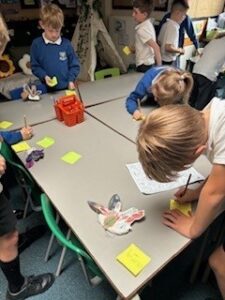
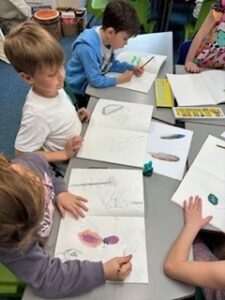
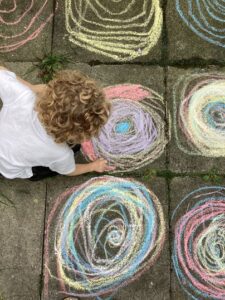
At Richard Taylor Primary School, we believe that every child is an artist, and our curriculum is designed to nurture their imagination while developing key artistic skills, including those with Special Educational Needs and Disabilities (SEND). We believe that art is a powerful tool for fostering creativity, self-expression, and cultural awareness. Through a rich and varied art curriculum, we aim to inspire pupils to think critically and confidently explore their own ideas.

Our Curriculum design

Our curriculum spans various forms of art which come under three headings, these are;

  • Drawing Skills and Sketchbooks
  • Surface and Colour
  • Working In 3D
  • Climate Change

Pupils are introduced to a variety of artists, both historic and contemporary, as well as art from different cultures and traditions, broadening their understanding of the world. Our art curriculum offers opportunities for children to collaborate with local artists, visit galleries, and work on community projects to enrich the children’s learning experience. Using CAPE’s teaching Climate Education through the Primary Curriculum (2026) we have woven an environmental thread through our art curriculum. These connections have been sequenced and adapted carefully to build depth and coherence over time including place, space. earth systems and environment.

Inclusion and Ambition for All

We ensure every pupil can access and succeed in Art through a range of supportive strategies, including:

  • A strong emphasis on exploration, experimentation and process, allowing pupils to learn through making and discovery rather than focusing solely on outcomes.
  • A positive and supportive learning environment where creativity, perseverance and self-expression are celebrated.
  • Exposure to a wide range of artists and art forms from different cultures, time periods and traditions, enriching pupils’ cultural capital.
  • Opportunities for pupils to work with a range of materials, tools and techniques, developing confidence through hands-on experiences.
  • A focus on talk, reflection and sketchbook work, enabling pupils to articulate ideas, evaluate work and develop creative vocabulary.
  • Flexible outcomes that value individual responses, encouraging pupils to take creative risks and develop their own artistic voice.

Enrichment

Art is fully integrated into the wider curriculum at Richard Taylor Primary School. From illustrating stories in English, to designing posters in Science and creating scenery for school performances, art enhances learning across subjects and deepens pupils’ understanding in meaningful and memorable ways.

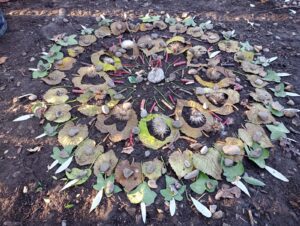
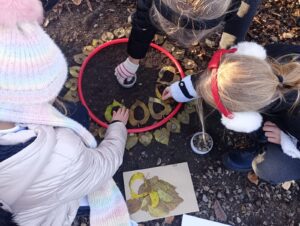
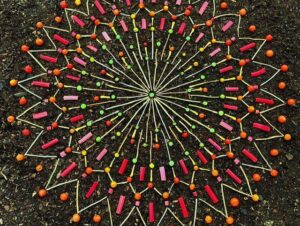
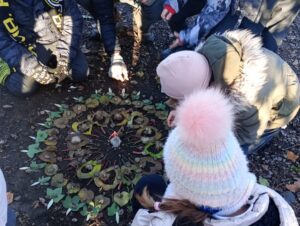
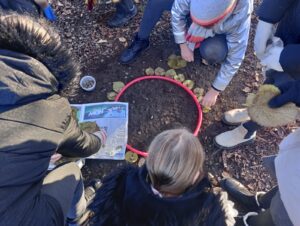
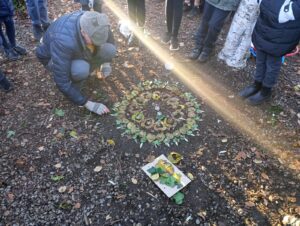
We are proud to have worked alongside Winston Plowes, a land artist who connects nature and art, enabling pupils to create original pieces inspired by their local environment.

Our curriculum is further enriched through visiting artists, special focus weeks and after-school art clubs. These exciting experiences help pupils develop a strong sense of place, curiosity and imagination.
Art at Home

Children benefit hugely from having time and space at home to explore, experiment and create freely. Simple resources, recycled materials and encouragement can support creativity just as effectively as specialist equipment. The following websites offer ideas and inspiration to help families enjoy making art together, while allowing children the freedom to lead their own creative journeys.

AccessArt – Art Resources to Use at Home
A wide range of open‑ended, creative activities designed to support exploration, confidence and enjoyment in art for all ages. This is particularly well aligned with our school approach. https://www.accessart.org.uk/art-resources-for-home/

BBC Bitesize – Art & Design (Primary)
Short videos and activities exploring drawing, painting, sculpture and artist studies, suitable for KS1 and KS2 pupils.  https://www.bbc.co.uk/bitesize/subjects/z6hs34j

Tate Kids
A free, interactive site from Tate galleries featuring art activities, games, videos and inspiration linked to real artists and artworks. https://www.tate.org.uk/kids

Draw with Rob

Rob Biddulph is a bestselling and multi award-winning children’s author and illustrator. A series of draw-along videos. Draw With Rob – YouTube

Kinder Art

Free art lessons, creative ideas, and helpful resources for children from reception through to secondary school KinderArt Elementary Art Lesson Plans Projects by Grade and Age
Our curriculum lead is Miss Hamer.  

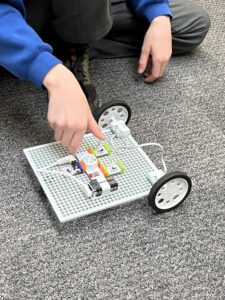
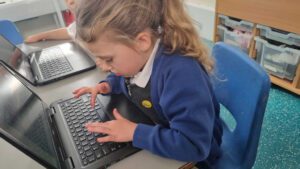
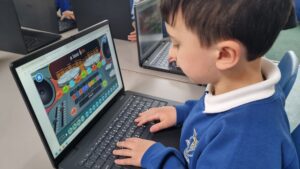
Our computing curriculum equips students with essential digital skills, fostering creativity, critical thinking, and problem-solving. Pupils learn how to use technology safely and responsibly, exploring coding, digital literacy, and online communication. 


Our Curriculum Design 

Through fun, interactive lessons, pupils develop confidence in using computers and other devices, preparing them for the digital world while understanding the importance of online safety. The computer curriculum focuses on three different strands of learning: 

Digital Literacy: This strand focuses on helping students safely and effectively use technology in everyday life. It includes understanding how to navigate the internet, communicate online, and protect personal information, ensuring students are responsible digital citizens. 

Computer Science: In this strand, students learn the fundamentals of coding and programming, how computers work, and the principles of logic and algorithms. It encourages problem-solving and creativity as they create their own programs and understand how technology functions. 

Information Technology: This focuses on using software and devices to collect, store, and share information. Students learn to create and edit documents, presentations, and media, developing practical skills for working with various digital tools. 

Computing at RTS                                             

Early Years
In Early Years, children build essential foundational skills through play, exploring patterns, sequencing, and problem-solving. They use simple technology to support curiosity and develop early digital language, using talk to share ideas and explain their thinking. 

Key Stage 1
In KS1, pupils follow the Teach Computing curriculum to learn basic programming, digital creativity, and how computers help us in everyday life. Oracy is built into lessons, with children encouraged to discuss, predict, and explain how their algorithms work. Online safety and responsible use of technology are taught throughout. 

Key Stage 2 

In KS2, pupils deepen their understanding of computer systems, data, networks, and more advanced programming. They apply foundational skills from earlier years to design, create, and debug increasingly complex projects. Talk is a key learning tool, with pupils using precise vocabulary to reason, justify decisions, and evaluate digital work. Online safety remains a continuous focus, helping pupils become confident and responsible digital citizens. 

Enrichment  

At our school, computing comes alive through enriching opportunities that spark curiosity and creativity. Children bring their ideas to life in our vibrant Animation Club, develop confident communication skills by using PowerPoint across the curriculum, and gain real‑world experience in data handling as Year 4/5 pupils run the tuck shop using Excel to track spending, profit, and stock. Our online safety activities also help pupils become responsible, thoughtful, and enthusiastic digital learners. 

Assessment  

Assessment in computing focuses on observing how confidently and independently pupils apply key skills during lessons and practical tasks. Teachers use ongoing formative assessment such as questioning, pupil discussions, and reviewing digital work to identify strengths, address misconceptions, and guide next steps. Practical outcomes including animations, presentations, or data projects also provide evidence of pupils’ understanding. This approach ensures all children make steady progress and develop the digital skills they need across the curriculum. 

Inclusion and Ambition for all 

Our computing curriculum is designed to be inclusive, accessible, and aspirational for every pupil. Lessons follow familiar, consistent structures and use a wide range of approaches that appeal to different learning styles. Pair and group tasks encourage collaboration and peer support, while unplugged activities help pupils explore concepts through movement, practical resources, and visual representations. This multimodal approach is especially beneficial for learners who find abstract ideas challenging. Tasks are carefully sequenced in small, manageable steps to support progression across Key Stage 1 and Key Stage 2, with support videos, scaffolded resources, and extension challenges enabling teachers to meet individual needs. A variety of free software and online tools also allows all pupils, including those with SEND, to demonstrate their understanding, build confidence, and express their ideas creatively. 

Computing at home 

We encourage pupils to continue developing their digital skills at home in fun and engaging ways. The following free, child‑friendly websites help children build confidence in typing, problem solving, creativity and online safety. 

  • Scratch (Coding and Creative Projects)
    Children can design animations, stories, and simple games while learning block‑based coding at their own pace.
    https://scratch.mit.edu/ 
  • Hour of Code Activities
    Short, themed coding challenges featuring Disney, Minecraft, sports, and space missions. Great for building confidence and logical thinking.
    https://hourofcode.com/uk 


  • Nrich(Maths + Logical Thinking)
    Not strictly computing, but excellent for developing problem‑solving and logical reasoning skills that support computational thinking.
    https://nrich.maths.org/ 


Design and Technology combines imagination and practical skills and provides the opportunity for children to work safely in a variety of problem solving activities. They will be able to use a wide range of materials and equipment and develop skills that are useful in everyday life. Design Technology puts learning in the hands of the child as they learn through the planning, making and evaluation of their own work.

Our Curriculum Design

We use the resource, “Projects on a Page” to ensure coverage and progression in our teaching which encompasses, structures, textiles, food technology. We also make relevant links with the art and science curriculum to enrich the subject.

Inclusion and Ambition for all


Learning at Home

Our Geography leader is Miss Sherwood.

At Richard Taylor Primary School, our Geography curriculum is designed to inspire curiosity, deepen understanding and help children make sense of the world around them. From exploring our local community to learning about diverse places and cultures across the globe, we aim to nurture knowledgeable, confident and environmentally responsible young geographers.


We want all children to:

  • Develop a fascination with local areas as well as the wider world.
  • Understand the links between people, places and environments, and how these change over time through both natural processes and human impact.
  • Build secure geographical knowledge supported by memorable experiences, fieldwork and hands‑on learning.
  • Communicate their understanding clearly and confidently by the end of their learning journey with us.

Children are provided with the opportunity to develop their geographical skills and take part in their own geographical fieldwork; collecting, analysing, understanding and communicating a range of geographical data both inside and outside of the classroom. 

Our Curriculum Design

Our curriculum is carefully structured from Early Years to Year 6 and aligned with the National Curriculum.

Early Years

Children begin developing simple mapping skills and using positional language through play, stories and outdoor exploration.

Key Stage 1 and Key Stage 2

As pupils progress, their skills deepen through:

  • Learning about the local area of Harrogate and the wider region of Yorkshire.
  • Exploring contrasting locations around the world to develop an understanding of interdependence and cultural diversity.
  • Using maps, atlases, globes and digital tools to investigate physical and human geography.
  • Engaging with topics such as sustainability and environmental responsibility, including the impact of plastic waste.

Fieldwork and Outdoor Learning

Fieldwork is a vital part of our Geography curriculum. Children take part in exciting opportunities such as:

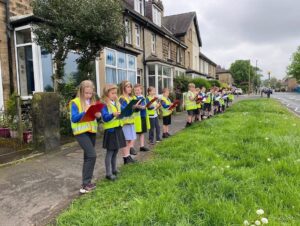
  • Exploring local green spaces.
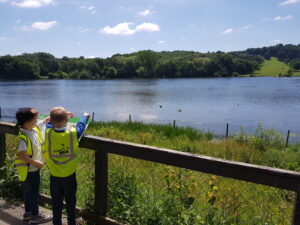
  • Visiting places of geographical interest such as RHS Harlow Carr.
  • Collecting, analysing and presenting geographical data using compasses, maps and digital tools such as QR codes to access resources independently.

These experiences bring geography to life and help pupils make meaningful connections between classroom learning and the real world.


Inclusion and Ambition for All 

We ensure every pupil can access and succeed in Geography through a range of supportive strategies, including:

  • A spiral curriculum that revisits key vocabulary and concepts to build confidence and deepen understanding over time.
  • Visual word mats to pre‑teach and reinforce new vocabulary.
  • Adapted learning materials such as cloze activities to reduce writing barriers.
  • High-quality visuals and practical experiences to support different learning styles.
  • Adapted maps to meet the needs of pupils with colour‑perception differences
  • Clear classroom displays of vocabulary, images and key facts to support retrieval and independence.

Enrichment

We enrich our curriculum through special events, themed days, local studies and opportunities to engage with the natural world. These experiences help children develop a strong sense of place, curiosity and environmental stewardship.

Geography at Home

Mr Cawte is our History lead.

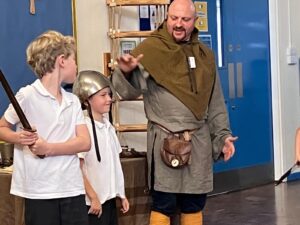
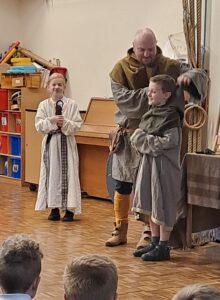
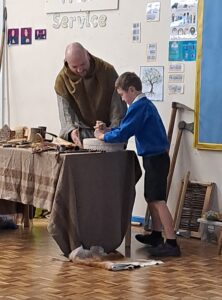
KS2 Anglo-Saxons and Vikings visit from Murton Park.

At Richard Taylor Primary School, our History curriculum aims to inspire curiosity, deepen understanding and help children make meaningful connections with the past. We want our pupils to explore how people lived, what they believed, and how events and ideas have shaped the world they know today. Through a rich and carefully sequenced curriculum, we support children to become thoughtful, confident young historians with a strong sense of chronology and historical perspective.

By providing a high-quality history curriculum, we aim to inspire curiosity within our pupils, to enable them to begin to think and act like historians: to ask perceptive questions; think critically; consider evidence; and develop perspective and judgement. History helps pupils to understand the complexity of people’s lives, the process of change, the diversity of societies and relationships between different groups. We want our children to enjoy and love learning about history by gaining knowledge, understanding and skills, not just through experiences in the classroom, but also with the use of fieldwork and educational visits, enabling them to deepen their understanding of who and what has shaped their world today.

Our Curriculum Design

In ensuring high standards of teaching and learning in history, we implement a curriculum that is progressive throughout the whole school. History is taught following the knowledge and skills stated in the National Curriculum – starting with the EYFS Early Learning Goals and progressing through the KS1 and KS2 curricular.

Historical concepts allow pupils to develop a deeper understanding of the past by exploring key ideas such as religion, chronology, citizenship, and power, particularly in relation to invasion and warfare. By examining these themes, pupils begin to think critically about how events and beliefs have shaped societies and influenced our world today.

Children’s key substantive knowledge in history is consolidated by regular retrieval practise which helps them strengthen their memory, deepen their understanding of historical concepts, and make connections between different time periods and themes.


At the end of their time at Richard Taylor School, our pupils with have developed a comprehensive understanding of key historical events and people, from the periods of history covered by our curriculum. They will be able to recall and apply knowledge confidently, with a firm grasp of chronological timelines and significant historical themes such as power, religion, citizenship, and warfare. They will be able to evaluate evidence, consider different perspectives, and ask thoughtful questions about the past; improving their ability to articulate historical ideas and arguments, both in written work and through verbal discussion.

The skills and knowledge acquired through the history curriculum will provide a strong foundation for their education in KS3 and beyond.

Inclusion and ambition for all

At Richard Taylor School, we are committed to ensuring that all pupils, including those with Special Educational Needs and Disabilities (SEND), have full access to a rich and engaging history curriculum. We recognise the diverse needs of our learners and strive to create an inclusive learning environment where every child can succeed.

Quality First teaching approaches are used to support all learners including modelling, explicit teaching of vocabulary, visual aids, examples and non-examples and planned mistakes.

Most children will work towards the same learning objectives as their peers with adaptations made for those children who require modifications to be able to succeed in learning. These scaffolds are usually available to all children who need them regardless of their SEND needs.


Some scaffolds used for support

  • simplified texts and resources
  • learning steps broken into smaller ‘chunks’ of knowledge
  • writing frames, sentence stems, modelled writing, group writing
  • use of technology – word processing, predictive text, speech-to-text software
  • peer work in mixed ability grouping

Mrs Phelan is our MFL leader.

At RTS we believe that learning another language gives children the valuable opportunity to develop positive attitudes to and respect for languages and cultures other than their own. We believe that learning another language is an important part of their education, allowing them to develop self-belief as well as building their communication skills in a creative and exciting way 

Although our MFL curriculum is taught in KS2, all children celebrate “The European Day of Languages” each year.

We aim for our children to become confident communicators of French, laying firm foundations for future language learning. Our children are encouraged to read, write and speak French with confidence, accuracy and fluency as well as having opportunities to explore the culture and traditions of French life. 

We aim to develop a lifelong love of learning languages, through engaging and fun activities, including rhymes, songs and stories, enabling our children to have the knowledge and skills to communicate in French with others. 

French is taught throughout KS2 using the NYCC scheme of learning. It is organised into 3 units of work for each year group, based on different themes including food, animals, people and hobbies. Each unit reinforces language previously taught and also introduces new language structures. 

We celebrate the many diverse languages spoken at RTS and aim to deepen their understanding and knowledge of the wonderful world created by God and promote an awareness of different cultures. 


Strategies for supporting pupils with SEND in French language lessons. 

  • Pictures and word banks are provided in lessons to support learners.
  • Extra time is given for learners when listening to spoken French  and time is built into lessons for practising pronunciation of key French words and phrases. 
  • Our scheme of learning provides a mix of activities to suit a range of learning styles, especially kinaesthetic activities. 
  • Repetition is key! Vocabulary from previous French lessons is built into each lesson to revisit and revise key language words and phrases. It helps to solidify new information and build muscle memory. New words, phrases and grammar structures are repeated through songs, games and interactive activities.  
  • Visual aids (eg flashcards, charts, word banks, video clips) are used throughout our French lessons to embed new vocabulary and aid recall. Gestures and miming supports understanding of key vocabulary in the target language. 
  • Children are seated so that they can see others in the class (where possible) and he teacher’s  face is clearly visible at all times when speaking. Sitting directly opposite the child whenever possible will assist with lip reading if required. 
  • Scaffolds, word banks and cloze procedures are sometimes used to support learners as well as writing frames .
  • We colour-code masculine and feminine nouns so that children can differentiate between them at a glance.

Mrs Crisell is our Music lead.

We aim to give every child the opportunity to participate in and enjoy a variety of musical activities, developing musical knowledge and skills in an imaginative, practical and engaging way, inspiring them as musicians.

Our Music Curriculum

At RTS we deliver a curriculum, which is carefully planned and sequenced to ensure children acquire the musical knowledge and skills to enable them to develop as musicians as they grow through the school. We aim to give all children the opportunity to participate in and enjoy a variety of musical activities, developing their musical knowledge and skills, allowing them to compose, listen and appraise with discernment. We want to engage and inspire our pupils to develop a love of music as well as their talent as musicians, and so increase their self-confidence, creativity and sense of achievement. We recognise and celebrate diversity as something that transcends musical boundaries and which can unite people from all over the world.

We implement this by building music into our everyday lives: singing is a big part of this whether in classes, in worship times or in choir. Singing helps demonstrate many of the practical skills we are trying to teach, as well as developing pitch and ear, encouraging performance and appraisal. Songs and musical games are suggested for each year group to allow the children to develop skills in a coherent way that will enable them to make progress from class to class, in line with both Kodaly and Voices Foundation thinking.

Suggested appropriate and diverse pieces to listen, appraise, move and respond to are there for each class supplemented by ideas suggested in the Model Music Curriculum and 2022 Music Plan as well as taking note of topic interests and cultural events. Children are taught specific musical vocabulary for each stage, each building on the previous one. Children learn to use both graphic and formal notation to record and extend their compositions. Cross curricular opportunities are established and developed, particularly links with PSHE, mindfulness and Mental Health.

The Music Curriculum is tailored to each class to show progress in the 7 skills of Melody, Rhythm, Pulse, Singing, Listening, Composing and Performing. These skills are listed below and can be found on each class’s Progress Tree along with an overview and relevant vocabulary to incorporate over the year. The skills are consolidated and built on from year to year as can be seen in the information below. Resource lists of suitable online links to use, songs to sing and music to listen to are included in the curriculum folder for each class to refer to, with reference to the 2021 Model Music Curriculum and the government’s 2022 Music Plan. All classes have access to weekly singing worships which further develop many of these skills. Links across the curriculum are easy to make and can actively help focus attention, create the right atmosphere and promote a creative response in many areas.

Enrichment

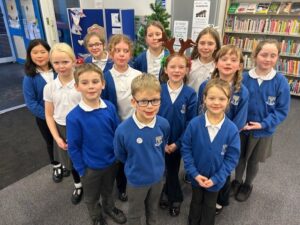
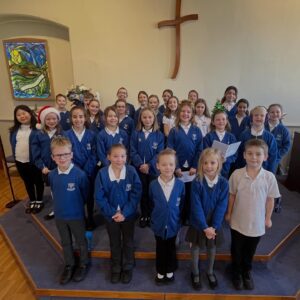
RTS has a rich history of promoting music beyond the curriculum. We have a very active choir consisting of children from Year 3 through to Year 6, led by Mrs Mills. which meet every week.  They regularly perform both in school and at events in Harrogate.  Last year, performances included concerts at the International Centre and the Royal Hall.


Our year 5 and 6 pupils have the opportunity to attend Young Voices every other year, performing at Sheffield arena.  It is a very memorable event! Our Music curriculum is supported by the “Sing Up” curriculum, to ensure coverage and progression throughout the key stages.

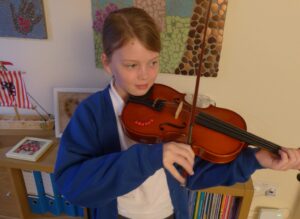
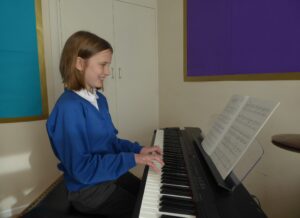
We offer peripatetic music lessons in a wide range of instruments, including keyboard, violin and woodwind instruments. We also work in partnership with ‘Rock Steady’ to offer children the opportunity to learn electric guitar and drums in bands, which perform for parents through the year. Details of music lessons can be accessed via the School Office.


Our PE lead is Mrs Martin.

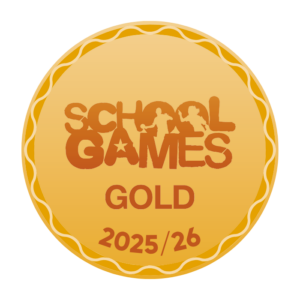
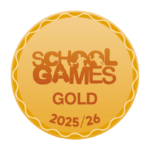
RTS has achieved ‘Gold’ in the School Games Mark in recognition of the commitment of the development of sport across the school and into the community. Participating in this process allows us to evaluate our PE provision and assists us in developing an action plan for future progress.

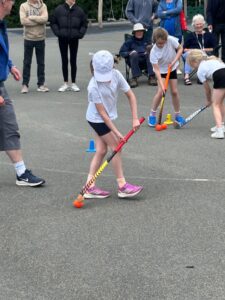
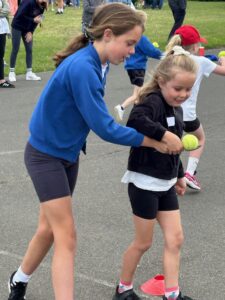
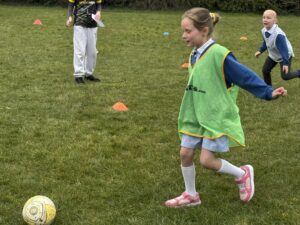
In P.E. our aim is that all the children should be physically active and develop flexibility, strength and skills. The children are encouraged to respond to tasks, apply themselves to activities and develop confidence in managing their bodies. All children have opportunities to lead parts of lessons and are encouraged to share ideas and opinions to improve their skills. Children are enabled to explore, select, modify, adapt and perfect movement to achieve a particular task. In P.E. all children have the chance to take part in athletic activities, dance, games and gymnastics and in year 2 and 3 are also given the opportunity to go swimming. Pupils are encouraged to be responsible members of a team and demonstrate sportsmanlike behaviour. In addition to this, they are also encouraged to make improvements to their personal best target.

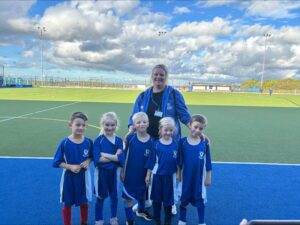
During the year, we enter a wide range of sporting events allowing children to experience and enjoy the opportunity to play competitively against other members of the primary community.

At the start of the year, the children are invited to apply for the position of Sports Ambassador using a process devised by the children. Once selected they provide a valuable pupil voice to enable our children to be more active in the decision making process for competitions, intra and inter games and PE.

Orienteering, cycling proficiency and outwards bounds activities – such as our year 6 residential – also support physical education in school.

For further information and our policies relating to PE, pleases click the below link which takes you to the PE and Sport Premium page of our website.

Our PE Curriculum can be found here – PE at RTS